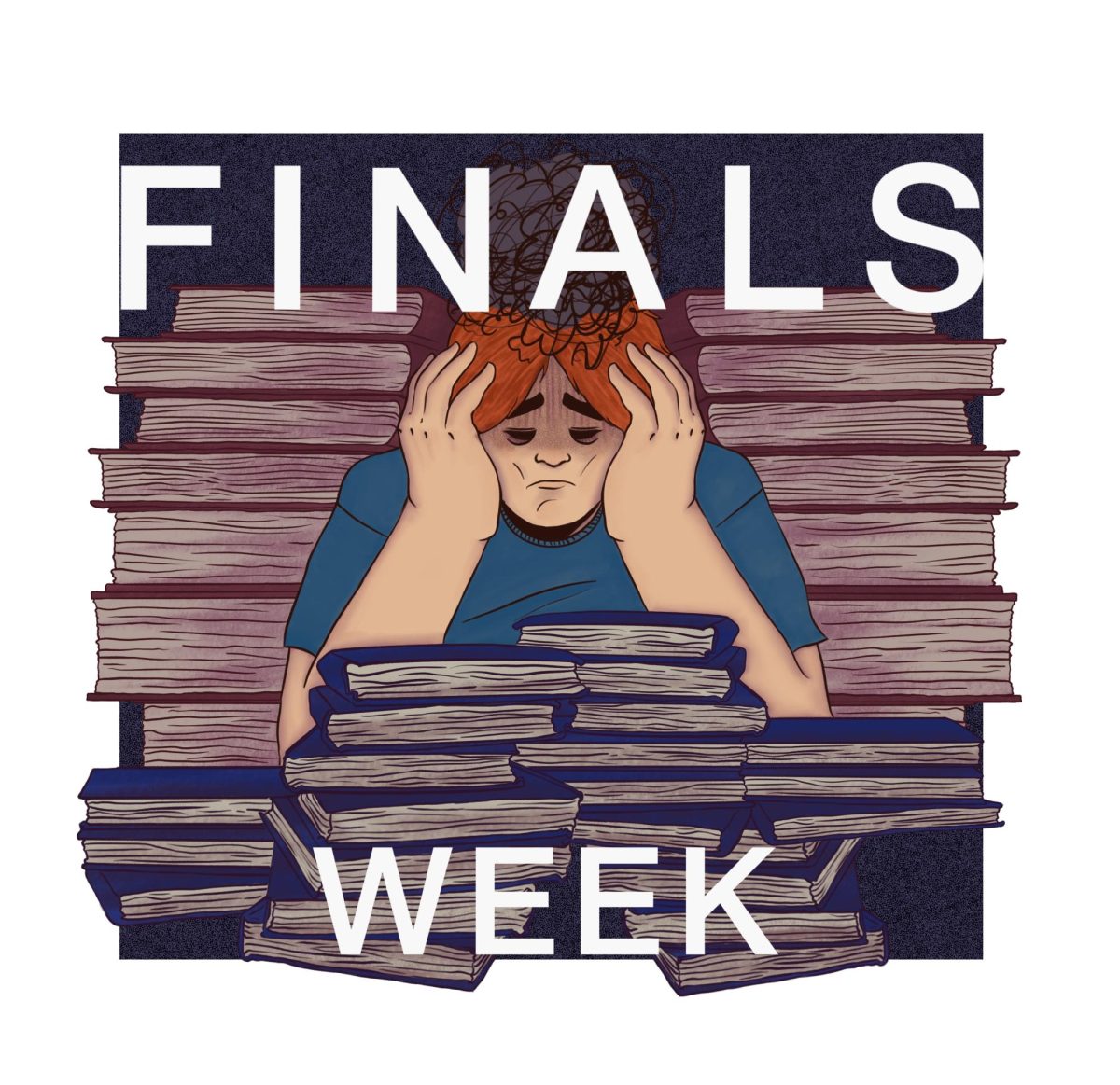
It’s 11p.m. on a Sunday night, and for many Eastfield students, the dark is only broken by the glow of a laptop screen. Desks are crowded with notes and the air is heavy with the stress of upcoming finals. This scene is something that is all too familiar at the end of the semester, despite highlighting a contradiction in plain sight: May is Mental Health Awareness Month, advocating for mindfulness and self care while the academic schedule demands the opposite.
A final exam isn’t just a source of academic stress for many students. It can also be one of several responsibilities to balance alongside a 40-hour workweek or managing family obligations. The constant mental management needed to switch between being a good employee and a good student leaves little room to rest. When the stress gets too high, it creates an environment where burnout becomes likely, which doesn’t just damage a student’s GPA. It can also affect mental stability, sleep patterns and even physical health.
Navigating exam season can be difficult, and it takes more than just “pushing through.” Setting study boundaries like taking small five to 10 minute breaks between study sessions can help relax an overly stressed nervous system, and dedicating a specific time each night to stop studying regardless of how much work is left gives the brain time to rest.
Sometimes, when little strategies like these aren’t enough, Dallas College offers support to help students manage the stress of finals. Counseling and Psychological Services (CAPS) can be found in room B1900 on Eastfield campus, or students can reach out through email at [email protected]. Appointments can be booked on Navigate, and the college additionally has a 24/7 help line at 972-860-4357, making sure students can get help even during those late Sunday nights.
It’s easy for students to see grades on a transcript as a representation of their success, but during Mental Health Awareness Month, it’s important to expand what success means. Success isn’t just about getting an A, but rather recognizing personal limits and balancing something as simple as sleep with pushing through another hour of studying, a skill that helps students long after they leave Dallas College.
A strong GPA might open the door to a first job or a favorite transfer school, but it’s building habits of self care that hold strong over decades to come. This May, the goal is more than just surviving exam week. It’s about discovering that mental health and academic success can coexist, showing that the “contradiction in plain sight” is an illusion after all.