
The same year New York abolished slavery in 1827, two free Black men in New York City founded the first African American owned newspaper. Freedom’s Journal editors Samuel Cornish and John Brown Russwurm, proving the existence of Black leadership, announced their bold intentions with this statement: “We wish to plead our own cause. Too long have others spoken for us.”
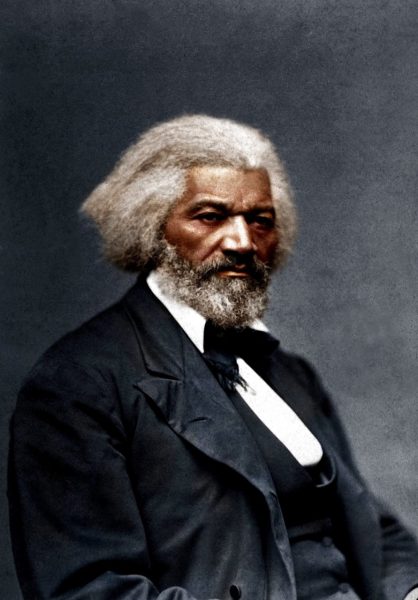
By the start of the Civil War, there were 40 publications that were founded by abolitionists, such as Fedrick Douglass with his The North Star, becoming the model of Black press activism. With harsh Jim Crow laws and voter suppression throughout the South, the Black press became one of the main outlets for the resistance movement. The paper promoted self-emancipation, Black autonomy and moral resistance, rejecting the idea that enslaved people should quietly wait for freedom.
Black magazines like The Colored American, edited by Pauline Hopkins, one of the first African American women to edit a magazine, and the NAACP’s publication, “The Crisis,” edited by W.E.B Du Bois, used their paper to uplift Black voices and fight for political change. The Colored American served the role of being one of the earliest platforms for Black literature, history and political ideas. The Crisis was crucial as a civil rights journal and exposed racial injustice, especially lynchings, discrimination, mobilized activism and promoted Black writers and artists. Both editors served individual importance as figures. Hopkins’ work demonstrated that print media could educate, inspire and mobilize Black communities, not just report news. Du Bois transformed Black journalism into a tool for advocacy and social reform connecting the Black elite and working class readers to shared struggles and solutions.
Apart from those publications, other magazines like Ebony and Jet followed in their footsteps and were both launched by John H. Johnson. He provided employment for Black journalists, photographers and writers building up Black media. He made the stories of African Americans mainstream visible and aspirational, blending activism with culture and community pride. Following World War II, Johnson’s magazine Jet started to become more influential. He published photographs of 14-year-old Emmett Till’s brutalized body after his 1955 lynching, helping ignite the modern Civil Rights Movement. During this time, Black reporters risked their lives to expose the violence of segregationists.
The Great Migration represents the moment where African Americans left the inequality and the inhumanity of the Jim Crow South for better life in the North. It is where Black newspapers came into their own as powerful voices for the community. The Great Migration also occurred in the west, which was home of one of the oldest papers, California Eagle led by Charlotta Bass, who was one of the only female editors at the time She turned her newspaper into a powerhouse. Bass was not a writer but a business and civil rights advocate. Her paper exposed racial injustice, challenged housing discrimination and advocated for civil rights, making it an essential institution in Black political and social life. Bass demonstrated that newspapers could lead social change, elevate voices and challenge systemic racism on the West Coast. She also ran for Vice President of the United States in 1952 as part of the Progressive Party, showing her activism extended beyond journalism.
Local Black newspapers did more than inform African Americans about national events, they connected them to what was happening in their own communities. These newspapers were central to Black public life, providing a space for discussion, debate and collective action. Through journalism, African Americans organized, resisted injustice and shaped the narrative about their own lives making the Black press an essential institution in the flight for equality and social change.