
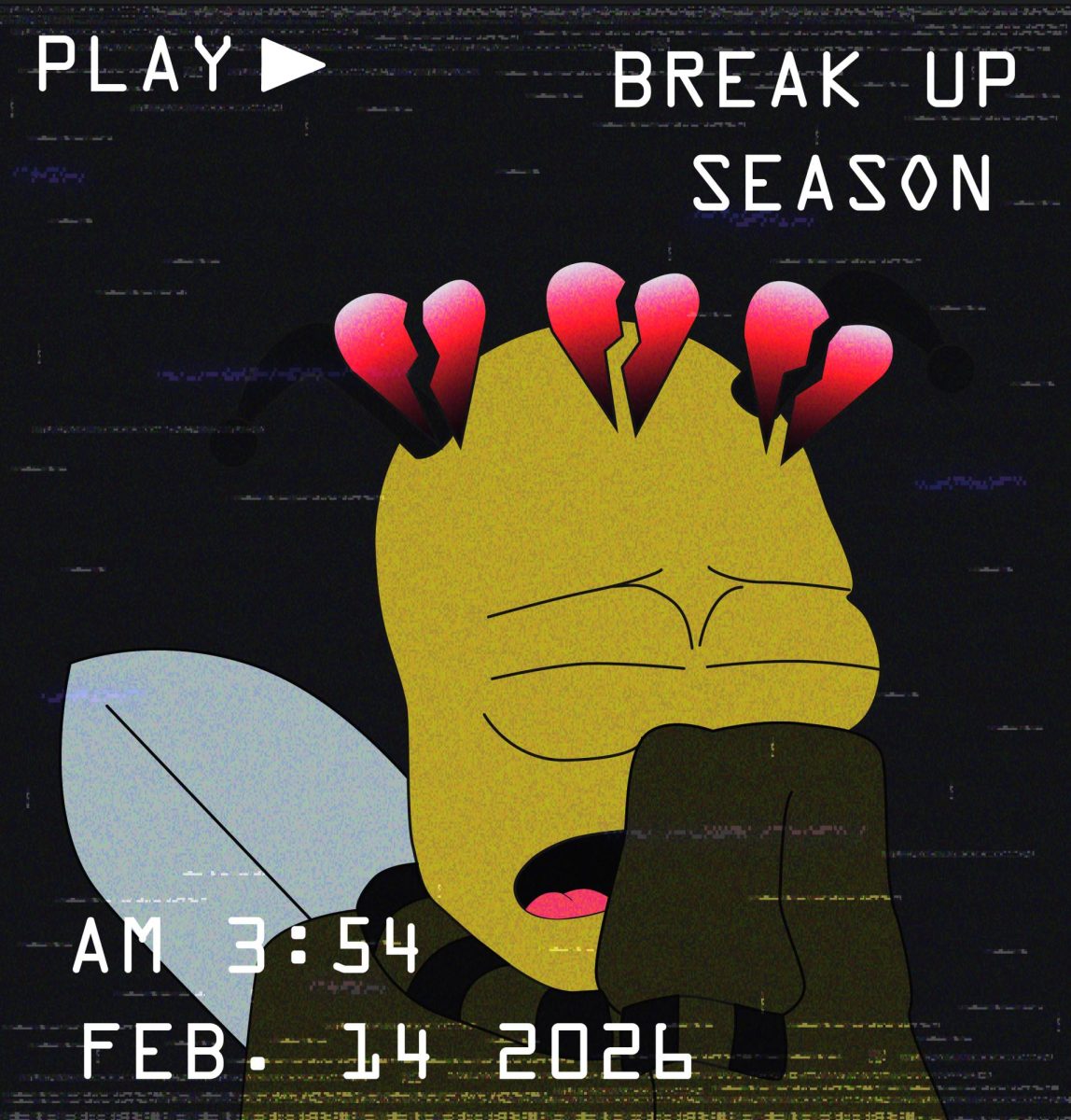
“Breakup season” is often used to describe a dramatic increase in couples separating right before big holidays like Valentine’s Day and Christmas. Many people believe that relationships are most likely to end in early February, late November or early December, as couples attempt to avoid the emotional stress of a relationship, family gatherings, and gift giving to their partners. This has become a widely known myth in pop culture, reinforced by personal accounts and social media narratives. However, studies have shown that the reality of breakup season is far more complex.
While December does experience a noticeable increase in breakups, it’s not when most relationships truly end. Studies of relationship status changes show that December and early January do see high levels of breakup activity. Some researchers suggest that December 11 is the most common day of the year for relationships to end. This pattern reflects emotional stress, financial stress and heightened expectations that often accompany the holiday season. For some couples, these factors often reveal someone’s true colors and issues not previously discussed.
Despite this, the highest concentration of relationship endings does not occur during the holidays alone. Research on divorce filings in the United States shows that divorce rates consistently increase in March and August. These months follow periods of transition, such as the end of winter or summer, when individuals often reflect on personal goals and long term satisfaction. Divorce rates currently average to approximately 2.4 divorces per 1,000 people as of 2023, as stated by NPR’s story “Divorces tend to spike in early spring and late summer. Here’s why.” This data challenges the idea that the holidays are the primary trigger for relationship dissolution.
Another misconception tied to the breakup season is the belief that those who separate during this time are more likely to remain alone or unmarried for the rest of their lives. This assumption is not supported by any substantial data to back up this claim. While it is true that a significant number of relationships end each year, most adults experience multiple long term relationships over the course of their lives. Studies indicate that more than half of adults will experience a major breakup, yet, many go on to form new partnerships or remarry. Early relationship breakups are particularly common, with a large percentage of unmarried couples separating within the first year. These outcomes reflect normal processes of compatibility assessment rather than long term isolation. Concerns about dying alone or remaining unmarried are often amplified during the winter months, when social comparisons and cultural expectations are more visible. However, trends show a steady rise in individuals choosing to remain single longer or marry later in life. These shifts are driven by changing social norms, economic factors and increased emphasis on personal fulfillment. Being unmarried does not equate to loneliness, nor does a breakup indicate long term failure. In reality, breakup season is not a moment tied to a calendar. It is better understood as a pattern influenced by emotional stress, life transitions and periods of reflection. Holidays, New Year’s, seasonal changes and personal milestones can all prompt individuals to reevaluate their relationships. Some partners choose to separate before the holidays, others wait until after, and many do so at entirely different points in the year.
Ultimately, the concept of breakup season oversimplifies the complexity of human relationships. Breakups are not caused by a season but by unmet needs, unresolved conflict and personal growth occurring at different times for different people. While the holidays may bring these issues into sharper focus, they are only one factor among many. Understanding the broader context allows for a more accurate and compassionate view of relationship endings and the new beginnings that follow soon after.