From the youngest child to the oldest adult, it seems that almost everyone loves animation. Whether it be the 2D Disney classics like “Pinocchio,” “The Lion King” and “Beauty and The Beast,” the festive stop motion Rankin Bass Christmas specials including “Rudolph The Red Nosed Reindeer” and “Frosty The Snowman,” or the groundbreaking 3D computer animated marvels like “Toy Story,” “Shrek” and “Spider-Man: Into The Spiderverse,” movies and TV shows come in many different genres and styles for any age. There’s truly something for everyone in the all encompassing medium. However, few people realize the trials, tribulations and innovation that go behind every frame. Before Walt Disney, Tex Avery or Walter Lantz ever lifted a pen in Hollywood, cinema was a much different beast altogether in the 1900s. Sound movies weren’t even a thought and most films only lasted 15 minutes. But Stuart J. Blackton, a British-American filmmaker, was about to make history. One of the leading men of early motion pictures, he founded Vitagraph studios in 1897. His film “The Enchanted Drawing” utilized what’s known as the “stop trick,” where whenever a shot of Blackton’s drawing changed, one element was altered. In this case, facial expressions were swapped out. Six years later, his film “Humorous Phases of Funny Faces,” was released. It is often regarded as the oldest known hand-drawn animation on standard film.
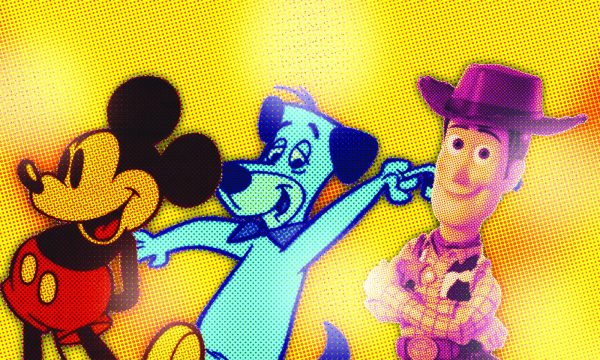
After that, the fledgling animation industry began to blossom, creating stars such as Felix the Cat and Gertie the Dinosaur. However, there was one cartoonist on the brink of losing everything he had worked for. His name was Walt Disney. Disney had recently lost the rights to his character “Oswald the Lucky Rabbit” to his ex-boss’ husband, Charles Mintz, who also hired away most of Disney’s animators. While there are multiple conflicting stories about how Disney created his biggest star after losing Oswald, only one truth prevailed. In secrecy in 1928, Disney and his close friend and partner Ub Iwerks created the biggest cartoon character the world would ever know: Mickey Mouse. Debuting in “Steamboat Willie,” Mickey was a sensation. Within a few short years, the mouse was ranked alongside the greats of Hollywood, like Clark Gable, Shirley Temple and the Marx Brothers. The success of his short films convinced Disney to do something considered unthinkable back then: create a feature length animated movie adaptation of “Snow White.”
Many in the industry scoffed at Disney, referring to his project as “Disney’s Folly” as many believed audiences did not want a movie-length cartoon. However, through his and his team’s hard work and determination, the Disney studio released “Snow White” in 1937 to the world. It was a huge success and a merchandising phenomenon and is regarded as one of the best animated films ever made. Driven by the triumph of their feature length experiment, Disney would continue to make animated films and his company continues that legacy to this day.
While both animated shorts and feature films up to the 1950s thrived in movie theaters everywhere, there was a brand new medium on the rise around this time: television. The idea of cartoons on TV was a no-brainer, and proved popular with the classic Looney Tunes, Popeye and Woody Woodpecker shorts airing on local stations to the delight of countless viewers. However, it wasn’t until Jay Ward’s “Crusader Rabbit” that original animated series were made specifically for television. But what truly kickstarted the TV animation revolution were two men named William Hanna and Joseph Barbera. While many might not have heard their names before, they definitely know their most beloved characters, Tom and Jerry. What truly gave birth to the most prolific part of their careers, though, was in 1957, when their longtime employer — MGM Cartoons — shut its doors for good. After that, many artists had lost their jobs, and Hanna and Barbera took it upon themselves to start their own studio, bringing over many of their colleagues from MGM. While it wasn’t their first show, “The Huckleberry Hound Show” was their breakout success, utilizing what is known as “limited animation,” which means that way less drawings were made and bits of animation were often reused due to tight budgets and turnarounds. Within just a few short years, the Hanna-Barbera studio became the new titans of the animation landscape, pumping out hit after hit such as “The Yogi Bear Show,” “Magilla Gorilla” and especially “The Flintstones,” the first ever prime time animated sitcom. Hanna and Barbera paved the way for original animation on television, inspiring other studios like Filmation, Trans Lux and Rankin Bass to get in on the burgeoning industry.
In the 1980s, something incredible was happening in colleges and technical institutions across the world: the birth of computer graphics. While experiments in digital art had been done in the past, it was now that it was starting to become popular. Will Powers had the groundbreaking music video for “Adventures in Success,” Hanna-Barbera started digitally inking and coloring their cartoons, and a little studio in Point Richmond, California was creating state of the art 3D animated shorts and commercials with a revolutionary computer built just for such a thing. Their name? Pixar. Founded by John Lasseter, Steve Jobs and Edwin Catmull after Lucasfilm spun off their computer graphics division, Pixar had been making short films for several years leading up to 1988’s “Tin Toy,” “Luxo Jr.” and “Knick Knack.” This short got the attention of Walt Disney Pictures, where they originally wanted to make a “Tin Toy” Christmas special but Disney chairman Jeffrey Katzenburg decided that, since Pixar was transitioning from mostly doing 30-second commercials to half-hour specials, they might as well just make a feature length film. Thus “Toy Story” was born. On November 22, 1995, “Toy Story” was released to the world and quickly became a hit with critics and audiences alike lauding it for its revolutionary animation and heartfelt story. Ultimately, “Toy Story” set the stage for the computer animation boom that continues to this day, with some modern films like “Spider-Man: Into The Spiderverse” and “Puss in Boots: The Last Wish” even blending 2D and 3D elements together to create unique eye-popping art styles.
The history of animation is a lot like the universe. It’s all encompassing, and constantly expanding. While AI tools on the horizon seem enticing, there’s one thing machines can’t replicate, and that’s the soul of an artist. Every artist, storyboarder and writer put their whole hearts and souls into their work. The public should support the dreamers who make these iconic animated movies possible.