To outsiders, Día de Muertos might seem like just another holiday, but for the hispanic population, it is a sacred bridge between the living and the dead. It is the way of remembering the ones that are not with us anymore, and shows that death is not the end of everything if we keep the memories of loved ones. Remembrance is not a quiet ritual — it is a celebration. The Día de Muertos that we know today is a blend between Aztec culture and Catholic traditions that were introduced with the Spanish Colonization. Most people think about this celebration being a somber memorial, when it isn’t.
Día de Muertos reminds people that life does not end with death. It shows that remembrance is a powerful act of connection, one that defies time and distance. This celebration gives important messages to the lives of people, such as grief and joy can exist together and that it is possible to miss someone deeply while smiling at the thought of them. It is a moment when families gather to share stories, laughter and food while honoring those who once walked among us and still linger in our hearts. One of the best ways to remember our loved ones is by making an ofrenda. An ofrenda is a sacred altar filled with love and memory. It is decorated with photos, candles, flowers, food and personal items that belonged to the person who has passed away.
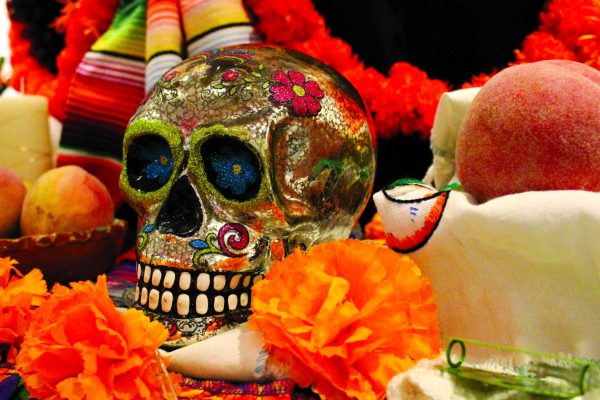
Every detail of the ofrenda that families put in their homes for Dia de Muertos holds a deep symbolic meaning. The bright orange cempasúchil symbolizes the bridge between life and death. Their color represents the sun, guiding spirits back to the world of the living with their light. Also, the photos of deceased loved ones are a very important part of the altar. They are used to welcome the spirits back to the world of the living.
There are four essential elements that a ofrenda has: water, fire, earth and air. For water, the families often leave a glass of water, which will quench the spirits’ thirst after a long journey to the world of the living. The candles represent fire, hope and faith illuminating the path for souls who visit. Pan de muerto is also an important piece of the ofrendas. It represents earth, which is not only delicious, but also contains some elements that represent the cycle of life and death. The round shape of the bread symbolizes eternity, while the “bones” on top represent the bones of the departed. Papel Picado is also a huge part of ofrendas, which represents the air. Each color represents an emotion or something related to the culture. For example, white represents the purity of the children, while green represents the youth. Each one of these elements make an ofrenda not only a display, but a welcome and celebratory tribute to honor the ones that are not with us anymore physically.
The beauty of Dia de Muertos lies in how it transforms pain into celebration. Instead of focusing on loss, the holiday focuses on the spiritual presence of departed loved ones and the emotional presence of memory itself. The colors, the music and the aromas remind people that life is meant to be cherished and shared. It is through these rituals that people heal, finding comfort in knowing that their loved ones will continue to live through them through every story told, and through every candle lit in their name.
In memory of Sofia Irene Pérez Ramírez and Manuel Campuzano.