Musicians obviously love music, but how do they gain that appreciation? Most people talk about how a musician’s work affects the public, but many don’t consider where that musician gained inspiration.
Throughout history, famous composers such as Vivaldi, Tchaikovsky, and Bach were known by their pieces, but few have really questioned how those composers were affected by just composing their work in a piece of music. Vivaldi, one of the most known baroque composers, was influenced by nature, poems and sounds from the countryside adding imagery to his work. Tchaikovsky, a romantic composer, gained his influence from Russian compatriots like Mikhail, Glinka, and Nikolai Rimsky-Korsakov, and Western masters such as Mozart, Wagner, and Bizet. His work grew in depth from his emotional life dealing with loss and love, playing an immense role in his musicality. Bach, another baroque composer, got his inspiration from his deep religious faith. He also continued to add diversity in his music from classical to jazz and electronic music.
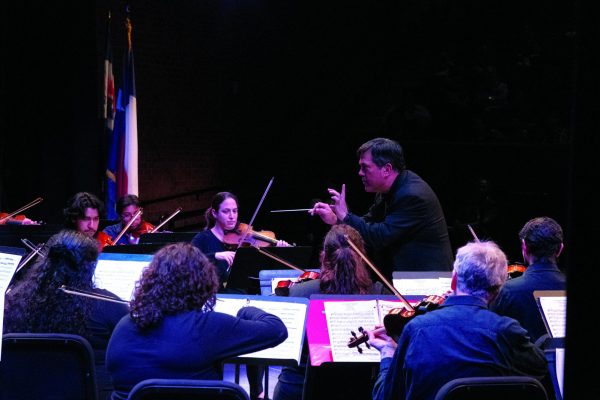
Dr. Abel Rodriguez, a music professor at Eastfield, credits his passion for taking the role of string conductor from his experience teaching music.
“As a conductor,” Dr. Rodriguez said. “I have the responsibility to organize the whole orchestra which involves conducting the orchestra in the music they play, selecting appropriate repertoire up to the performer’s skill level, and giving the opportunity to the performers so they can improve their musical identity for future performances.”
Dr. Rodriguez also appreciates his job because of his students. He enjoys meeting so many musicians with differing backgrounds and lives not only because he recognizes his opportunity to impact their musical life, but also gets a chance to learn about his students and what their musical backgrounds are. “Being able to share my understanding of music and watch students improve and develop is very rewarding,” he said.
Rodriguez has a heavily influenced music background. Growing up, he was always around music from playing many different instruments to seeing his father teach other musicians. With his passion for music, he believes “that music is an art that can connect with our everyday lives and experiences.”
Through Dr. Rodriguez’s teaching, he strives to instill inspiration and motivation in his students. Dr. Rodriguez has witnessed and heard about stories of conductors that were harsh with their students.“If you have a very aggressive leadership style, it usually doesn’t bring out more in students,” he said. “Developing into a musician takes time, you have to work on a lot of skills and awareness of what you play.”
For new and learning musicians, Dr. Rodriguez recommends one important tip. “ Music is a process. A lot of times we tend to make things more difficult with things such as tensing up, or trying to do too much too quickly,which can end up taking longer,” he said.
“Patience is the number one key to becoming an improving musician.”
Hayden Hernandez, a current viola performer for the Eastfield orchestra, agrees with Dr. Rodriguez’s beliefs on how music is very impactful with life’s everyday emotions. “When I watch other musicians I feel like they play with their whole heart and soul,” he said.
“And I feel lots of emotion from some orchestra pieces that can be inspiring or remind me of a specific moment in my life.” Hernandez claims music is not only fuel for his motivation to perform symphonic art, but it is also part of life’s struggles and accomplishments.
From Eastfield’s music rooms to the world’s largest concerto, musicians from every level of profession find themselves inspired by their fellow artists.