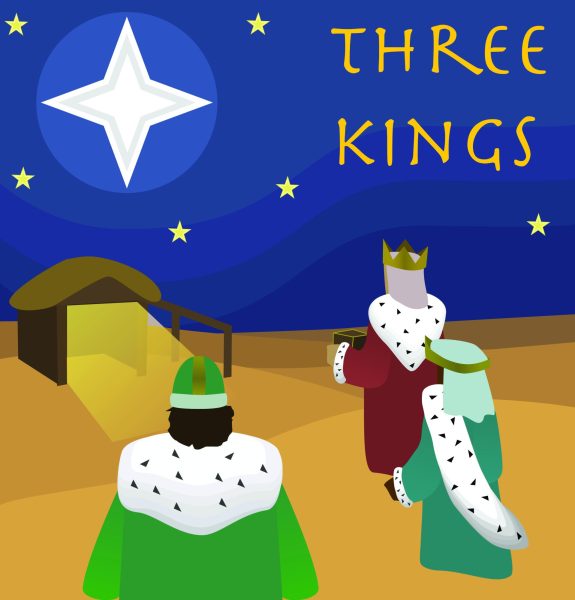
As many stop celebrating the holiday season when the New Year begins, some seem to forget the last major holiday celebration of the season, Three Kings Day, which is celebrated on January 6. This holiday celebrates the arrival of the three kings: Melchoir, Caspar and Balthazar, to the birthplace of baby Jesus.
It is said that on every January 6, people are able to see the Star of Bethlehem, the same star the three kings followed in their long journey to Bethlehem. In the Gospel of Matthew, readers get the explanation of each gift given to Jesus: gold, frankincense and myrrh. Gold symbolized Jesus’ kingship, frankincense represented Jesus’ divinity and myrrh, which foreshadowed his death and suffering.
The origin of this tradition comes from medieval Europe, specifically from France. The galette des rois — or King’s cake — is the closest food to the Rosca de Reyes. It was a large cake cooked with a bean hidden inside and whoever found it was made king or queen for the day. This tradition later arrived in Spain, where it was modified. From there, it was passed to Mexico and certain parts of Latin America in the time of the Viceroyalty.
Although this celebration is not as popular as Christmas, it still holds a lot of importance for the Catholic community. One of the most popular traditions is the sweet yeast bread, which is called Rosca de Reyes. The holiday specialty has different meanings in the design of the dish. The oval shape of the Rosca signifies a crown and the eternal love of God. The candied fruits, which are used to decorate the bread, are the jewels the three kings gifted to baby Jesus. Depending on the bakery, there are multiple baby Jesuses hidden inside the Rosca, which signifies Jesus hiding from King Herod. The dish is also seen as a game for many as those who get baby Jesus while eating the bread have to make tamales on February 2, also known as Dia de la Candelaria.
Dia de la Candelaria in English is known in the Catholic church as the Feast of the Presentation of Jesus Christ. This celebration commemorates the day when Mary brought her son to the Temple of Jerusalem for the first time. While the feast day is fully rooted in Christianity, some Candelaria traditions in Mexico date back to before the arrival of the Spanish colonists to the continent. The importance of tamales on Candelaria — along with the atole — comes from the importance of maize to indigenous populations.
Although these holidays are filled with religious symbolism, the traditions mostly consist of a gathering of family or friends, filled with lots of laughter, hot chocolate or atole, stories and gifts. The celebrations conclude the Christmas season with a joyful spirit, and a big reminder that what matters the most is the time shared.